
Disclosure: This post contains affiliate links. If you buy through them, we may earn a small commission at no extra cost to you. We only recommend products we have genuinely researched and tested. Prices and availability are accurate as of the publish date but may change.
The Single Most Important Skill in Hydroponics
I spent my first year of hydroponic growing chasing the perfect nutrient recipe. I measured EC obsessively, compared Flora Series to Masterblend, and debated whether silica was worth adding. Meanwhile, my plants were struggling with yellowing leaves and stunted growth, and I couldn’t figure out why. The problem? I was ignoring pH entirely.
Once I learned to monitor and manage pH consistently, everything changed. Nutrient deficiencies vanished, growth rates doubled, and my plants looked healthier than they ever had in soil. pH management is the single most impactful skill in hydroponic growing, and it’s also one of the easiest to master once you understand the basics. This guide will walk you through everything you need to know. For context on building your system, check out our guide to the best hydroponic systems for beginners.
Why pH Matters So Much in Hydroponics
pH is a measure of how acidic or alkaline your nutrient solution is, on a scale of 0 to 14. A pH of 7 is neutral. Below 7 is acidic. Above 7 is alkaline. In hydroponics, pH controls one critical thing: nutrient availability., per University of Arizona Controlled Environment Agriculture Center.
Every essential nutrient has a specific pH range where it’s soluble and available for plant roots to absorb. When pH drifts outside this range, certain nutrients become chemically “locked out”; they’re still present in the water, but the plant literally cannot take them up. You could have the most perfectly balanced nutrient solution in the world, but if the pH is wrong, your plants will show deficiency symptoms.
The Nutrient Availability Chart
Here’s what happens to key nutrients at different pH levels:
- Nitrogen (N): Available across a wide range (pH 5.0 to 8.0). Rarely locked out by pH alone.
- Phosphorus (P): Best availability at pH 5.5 to 6.5. Locks out below 5.0 and above 7.0.
- Potassium (K): Best at pH 5.5 to 6.5. Locks out below 5.0 and above 7.5.
- Calcium (Ca): Best at pH 6.0 to 7.5. Locks out below 5.5; a very common deficiency in hydroponics at low pH.
- Magnesium (Mg): Best at pH 6.0 to 7.0. Locks out below 5.5.
- Iron (Fe): Best at pH 4.5 to 6.0. Locks out above 6.5; another extremely common issue.
- Manganese (Mn): Best at pH 5.0 to 6.5. Locks out above 7.0.
The sweet spot where all nutrients are simultaneously available is roughly pH 5.5 to 6.5. This is your target zone for almost all hydroponic crops. For more on how nutrients interact, read our complete hydroponic nutrients guide for beginners.
Ideal pH Ranges for Common Hydroponic Crops
While 5.5 to 6.5 works for most crops, some plants prefer slightly different ranges:
| Crop | Optimal pH Range | Notes |
|---|---|---|
| Lettuce | 5.5 to 6.0 | Tolerates slightly lower pH well |
| Basil | 5.5 to 6.5 | Versatile; grows well across the range |
| Tomatoes | 5.8 to 6.5 | Prefers slightly higher pH for calcium uptake |
| Peppers | 5.8 to 6.5 | Similar to tomatoes |
| Cucumbers | 5.5 to 6.0 | Heavy feeders; watch pH drop |
| Strawberries | 5.5 to 6.0 | Sensitive to high pH iron lockout |
| Spinach | 6.0 to 6.5 | Prefers slightly higher pH than most greens |
| Kale | 5.5 to 6.5 | Very adaptable |
| Microgreens | 5.5 to 6.5 | Short grow cycle makes pH less critical |
If you’re growing a mix of crops in one system, target pH 5.8 to 6.2 as a compromise that works for nearly everything.
How to Measure pH: Tools Compared
Accurate pH measurement is non-negotiable. Here are the three main methods, from cheapest to most advanced:, following University of Georgia Extension.
pH Test Strips ($5 to $10 for 100 strips)
Dip a strip in the solution, wait 15 seconds, and compare the color to a chart. Pros: Cheap, no calibration needed, good for quick checks. Cons: Accuracy is only plus or minus 0.5 pH units, which is too imprecise for fine-tuning. Color interpretation is subjective, especially under grow lights. I use test strips as a backup but never as my primary tool.
Digital pH Meters ($30 to $80)
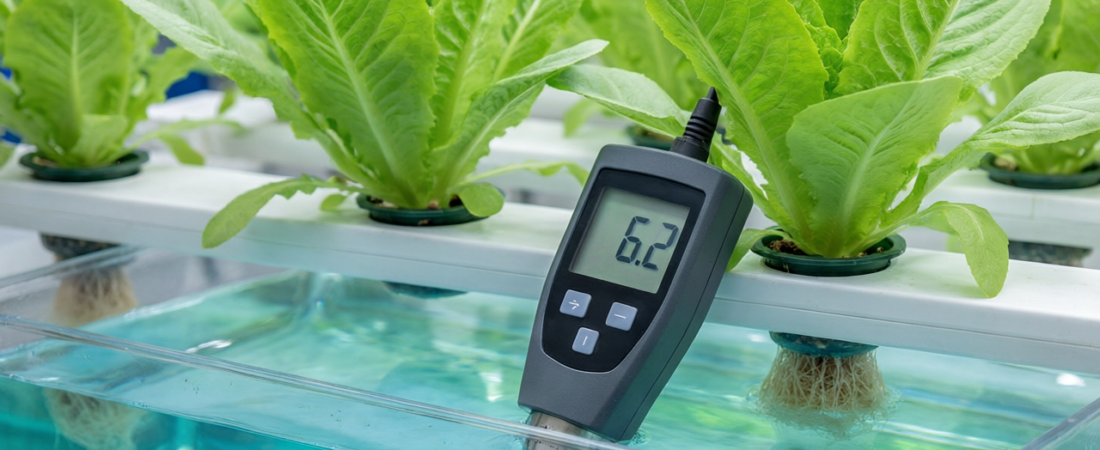
A probe that you dip into the solution for an instant digital reading. The Apera Instruments PH20 ($55) is my daily driver and the most popular meter among hobbyist hydroponic growers. The Bluelab pH Pen ($75 to $90) is the premium option with slightly better accuracy and replaceable probes. Pros: Accurate to 0.1 pH units, fast readings, easy to use. Cons: Requires regular calibration (every 1 to 2 weeks), probes degrade over 1 to 2 years and need replacement, must be stored properly (in storage solution, never dry).
Continuous pH Monitors ($100 to $250)
A permanently installed probe that continuously displays pH on a screen and can trigger automated dosing pumps. The Bluelab Guardian Monitor ($200 to $250) tracks pH, EC, and temperature simultaneously. Pros: Real-time monitoring, no manual testing needed, can integrate with dosing systems. Cons: Expensive, probe still needs periodic calibration and eventual replacement, overkill for a single-bucket DWC setup.
My recommendation: start with a digital meter (Apera PH20). It gives you the accuracy you need at a reasonable price. Upgrade to a continuous monitor when you have a multi-bucket or recirculating system where pH swings are more consequential.
pH Up and pH Down Products
When your pH needs adjustment, you’ll use two chemicals:
pH Down (to Lower pH)
Typically phosphoric acid (H3PO4) at a diluted concentration. The most popular products:
- General Hydroponics pH Down ($8 to $12 per quart): Reliable, widely available, and well-documented. This is what I use and recommend for beginners.
- Technaflora pH Down ($10 to $15 per quart): Similar formulation; equally reliable.
- Budget option: Food-grade phosphoric acid (85%) from a brewing supply store. Much cheaper per volume but more concentrated; use with extreme care and dilute before adding to your reservoir.
pH Up (to Raise pH)
Typically potassium hydroxide (KOH) or potassium carbonate. Popular products:
- General Hydrogenics pH Up ($8 to $12 per quart): Matches the pH Down for consistent results.
- Technaflora pH Up ($10 to $15 per quart): Same reliability.
- Budget option: Potassium carbonate powder from a brewing or hydroponic supply. Dissolve in water before adding.
Natural Alternatives
Some growers use lemon juice or vinegar to lower pH and baking soda to raise it. I don’t recommend these for hydroponics. They’re unstable (pH bounces back within hours), can feed microbial growth, and make it impossible to maintain consistent levels. Stick with commercial pH adjusters; they’re inexpensive and designed for this purpose.
Step-by-Step pH Adjustment Process
Here’s the exact process I follow every time I check pH. This takes about 3 minutes:
- Stir the reservoir: Gently stir the nutrient solution to ensure it’s well-mixed. pH can stratify in stagnant water, giving false readings.
- Rinse the probe: Rinse your pH meter probe with distilled water. Never touch the glass bulb with your fingers.
- Take a reading: Insert the probe into the reservoir and wait for the reading to stabilize (usually 10 to 30 seconds). Record the value.
- Determine if adjustment is needed: If pH is within your target range (5.5 to 6.5), you’re done. If it’s outside the range, proceed to adjust.
- Add pH adjuster: Add pH Down (if pH is too high) or pH Up (if pH is too low) in very small increments. For a 5-gallon reservoir, start with 1 to 2 mL (about 1/4 teaspoon). For a 20-gallon reservoir, start with 5 to 10 mL.
- Stir and wait: Stir the solution thoroughly and wait 15 to 20 minutes for the adjuster to distribute evenly.
- Retest: Take another reading. If still outside the target range, repeat with another small dose. Never add large amounts at once; overshooting wastes chemicals and stresses plants.
- Record the result: Keep a simple log (a notebook or phone app) of your pH readings and adjustments. Over time, you’ll learn the patterns of your system.
Factors That Affect pH in Hydroponics
Understanding why pH changes helps you predict and prevent problems. Here are the main factors:
Plant Nutrient Uptake
This is the biggest driver of pH change. Plants absorb cations (positively charged ions like K+, Ca2+, Mg2+) and anions (negatively charged ions like NO3-, PO4-) at different rates. When they absorb more cations, they release H+ ions, lowering pH. When they absorb more anions, they release OH- ions, raising pH. This means your pH will naturally drift as plants feed, and the direction depends on the growth stage and nutrient formulation.
Nutrient Concentration
Adding nutrients to water almost always lowers pH because most hydroponic nutrient solutions are acidic. This is why you should always mix nutrients first, then check and adjust pH afterward, not before.
Water Source
Tap water varies enormously by region. In hard water areas, tap water may have a pH of 7.5 to 8.5 and high mineral content (especially calcium and magnesium carbonates) that buffers pH upward. In soft water areas, tap water may be close to neutral. Reverse osmosis (RO) water has a pH near 7.0 with no buffering capacity, making it easier to adjust but also more susceptible to rapid swings. I recommend testing your tap water’s pH and hardness before building your nutrient regimen.
Growing Medium
Some growing media affect pH. Rockwool is naturally alkaline (pH 7.0 to 8.0) and must be pre-soaked in pH-adjusted water before use. Coco coir can buffer pH in the 5.5 to 6.5 range. Clay pebbles are generally pH-neutral but can leach residual alkalinity if not rinsed thoroughly. If you’re using a DWC or other hydroponic system with clay pebbles, rinse them until runoff is clear before first use.
Common pH Problems and Troubleshooting
pH Keeps Rising
This is the most common issue. Causes include hard water with high carbonate buffering, insufficient nutrient concentration (plants absorbing anions faster), and certain nutrient formulations high in nitrate nitrogen. Fix: Switch to RO or filtered water if your tap is very hard. Ensure nutrient strength is appropriate for the growth stage. Consider a nutrient formulation with a higher ammonium-to-nitrate ratio, as ammonium uptake drives pH down.
pH Keeps Dropping
Less common but can occur with heavy-feeding plants in the vegetative stage. Causes include high ammonium nitrogen uptake and microbial activity in the reservoir. Fix: Check that you’re not over-feeding ammonium-heavy nutrients. Ensure the reservoir is clean and well-aerated. Add pH Up in small increments.
pH Swings Wildly
If pH bounces up and down by 0.5+ units between checks, your solution likely has low buffering capacity. Fix: Increase nutrient concentration slightly (nutrients provide some buffering). Use a nutrient brand with built-in pH buffering (General Hydroponics Flora Series and Advanced Nutrients both include buffering agents). Consider adding a small amount of potassium silicate, which stabilizes pH and provides beneficial silicon.
Nutrient Lockout Despite Correct pH
If your pH is in range but you still see deficiency symptoms, the problem may be nutrient antagonism (excess of one nutrient blocking uptake of another), incorrect EC/TDS, or root zone problems (disease, low oxygen). Fix: Check EC, inspect roots, and consider a full reservoir change with fresh nutrients at recommended strength.
Automated pH Monitoring Options
For larger or more complex systems, automated monitoring eliminates the guesswork:
- Bluelab Guardian Monitor ($200 to $250): Displays pH, EC, and temperature continuously. Wall-mounted with a submersible probe. The gold standard for hobby to small-commercial growers.
- Inkbird pH Controller ($80 to $120): A budget-friendly controller that can trigger a dosing pump when pH drifts outside your set range. Not as accurate as Bluelab but adequate for most hobby systems.
- Atlas Scientific EZO pH Circuit ($100 to $150): For DIY enthusiasts who want to build a custom monitoring system with Arduino or Raspberry Pi. Requires programming knowledge but offers maximum flexibility.
For a single 5-gallon DWC bucket, automated monitoring is overkill. A digital meter and a 3-day check schedule is sufficient. But if you’re running a 4-bucket or recirculating system, a continuous monitor pays for itself in peace of mind.
Your Weekly pH Management Routine
Consistency is more important than perfection. Here’s the routine I follow:
| Day | Action |
|---|---|
| Monday | Check pH and EC. Adjust if needed. Top off water level. |
| Wednesday | Check pH. Adjust if needed. Visual inspection of plants and roots. |
| Friday | Check pH and EC. Full reservoir change (drain, rinse, refill with fresh nutrients). Adjust pH after mixing. |
| Sunday | Quick pH check. Top off water if needed. |
This takes about 5 minutes per check and 15 minutes for the Friday reservoir change. Total weekly maintenance time: about 30 minutes for a single-bucket system. That’s less time than most soil gardeners spend weeding.
pH vs. EC: Understanding the Relationship
pH and EC (electrical conductivity, a measure of total dissolved salts/nutrients) are the two pillars of hydroponic water chemistry. They interact in important ways:
- EC affects pH stability: Higher nutrient concentrations provide more buffering, making pH more stable. Very low EC solutions (like plain water) have almost no buffering and swing pH wildly with any addition.
- pH affects EC readings: Extreme pH values can slightly alter EC readings. Always calibrate your EC meter separately from your pH meter.
- Plant uptake changes both: As plants consume nutrients, EC drops. As they selectively absorb ions, pH drifts. Tracking both together tells you how fast your plants are feeding and which direction pH is likely to move.
- The practical takeaway: Always measure pH and EC together. A sudden drop in EC with stable pH means your plants are feeding aggressively (add more nutrients). Stable EC with drifting pH means the nutrient balance is off (check your formulation). Both dropping means it’s time for a full reservoir change.
Final Thoughts
pH management doesn’t have to be complicated. The core practice is simple: measure pH every 2 to 3 days, keep it between 5.5 and 6.5, and make small adjustments when it drifts. Invest in a good digital meter (the Apera PH20 is my top pick), calibrate it regularly, and keep a log of your readings.
Within a few weeks, you’ll start to see patterns in your system. You’ll know that your pH tends to rise by 0.2 units between checks, or that adding nutrients drops pH by 0.3. This pattern recognition is what separates experienced hydroponic growers from beginners, and it only comes from consistent measurement.
If you’re setting up your first hydroponic system, buy a pH meter at the same time you buy your nutrients. Don’t wait until your plants show problems. Proactive pH management is the cheapest, most effective way to ensure healthy, vigorous growth from day one. Your plants will reward you with the kind of growth that makes hydroponics so addictive.
Frequently Asked Questions
What is the ideal pH range for hydroponics?
Most hydroponic crops thrive between pH 5.5 and 6.5. Leafy greens prefer the lower end around 5.5 to 6.0, while tomatoes and peppers tolerate 6.0 to 6.5. Staying in range ensures all essential nutrients remain soluble and available to roots.
How often should I check hydroponic pH?
Daily checks are ideal for the first few weeks while you learn your system’s drift pattern. Once stable, checking every 2 to 3 days is usually sufficient. Always test after adding nutrients or pH adjusters, and before each reservoir change.
Why does my hydroponic pH keep rising?
Rising pH is typically caused by plant uptake of positively charged ions (cations) like ammonium, calcium, and magnesium, which leaves behind hydroxyl ions. Switching part of your nitrogen source to nitrate-based fertilizer usually slows the drift.